

It was more than two and a half years ago that Robinhood announced it was launching a credit card called the Robinhood Gold Card. On that launch day, I joined the waitlist and even purchased Robinhood Gold for the first time in anticipation. Well, I proceeded to sit right there until just a couple of months ago, when I finally got an email saying my time had come.
So, now that I have the Robinhood Gold Card, what do I think of it? Let’s take a look at what the card offers, my thoughts on it, and what big mistake I fear people could be making with it.
- Earn 3% back in all categories
- Redeem for cashback at 1¢ per point
- Great authorized user and virtual card options
- Robinhood Gold membership required ($50 annually)
- Statement credit option devalues points
About the Robinhood Gold Card
Applying for the Card and Gold Membership
As I mentioned, as of this writing in October 2026, the Robinhood Gold Card still operates a wait list. However, it does seem as though they are sending out many more applications now than in the past. In fact, I added another email address to the queue just to see and got an invitation less than 2 weeks later. That said, I can’t say for sure how long you might have to wait.
Next, as I alluded to in my intro, the Robinhood Gold Card is exclusive to Robinhood Gold members. Gold is a service that costs $5 a month or $50 a year and includes such benefits as enhanced APY on uninvested cash, a 3% IRA contribution match, and more.
By the way, while it is annoying that it took me so long to get a Gold Card invite and that I was paying for a Gold membership that entire time, the good news is that I actually made money with Gold each year thanks to the 3% IRA match. Also, from what I can tell, you can join the waitlist without having a Gold membership (or even a Robinhood account), so you can just hold out for an invite and then pay up when it’s time to apply.
The Physical Card and Virtual Cards
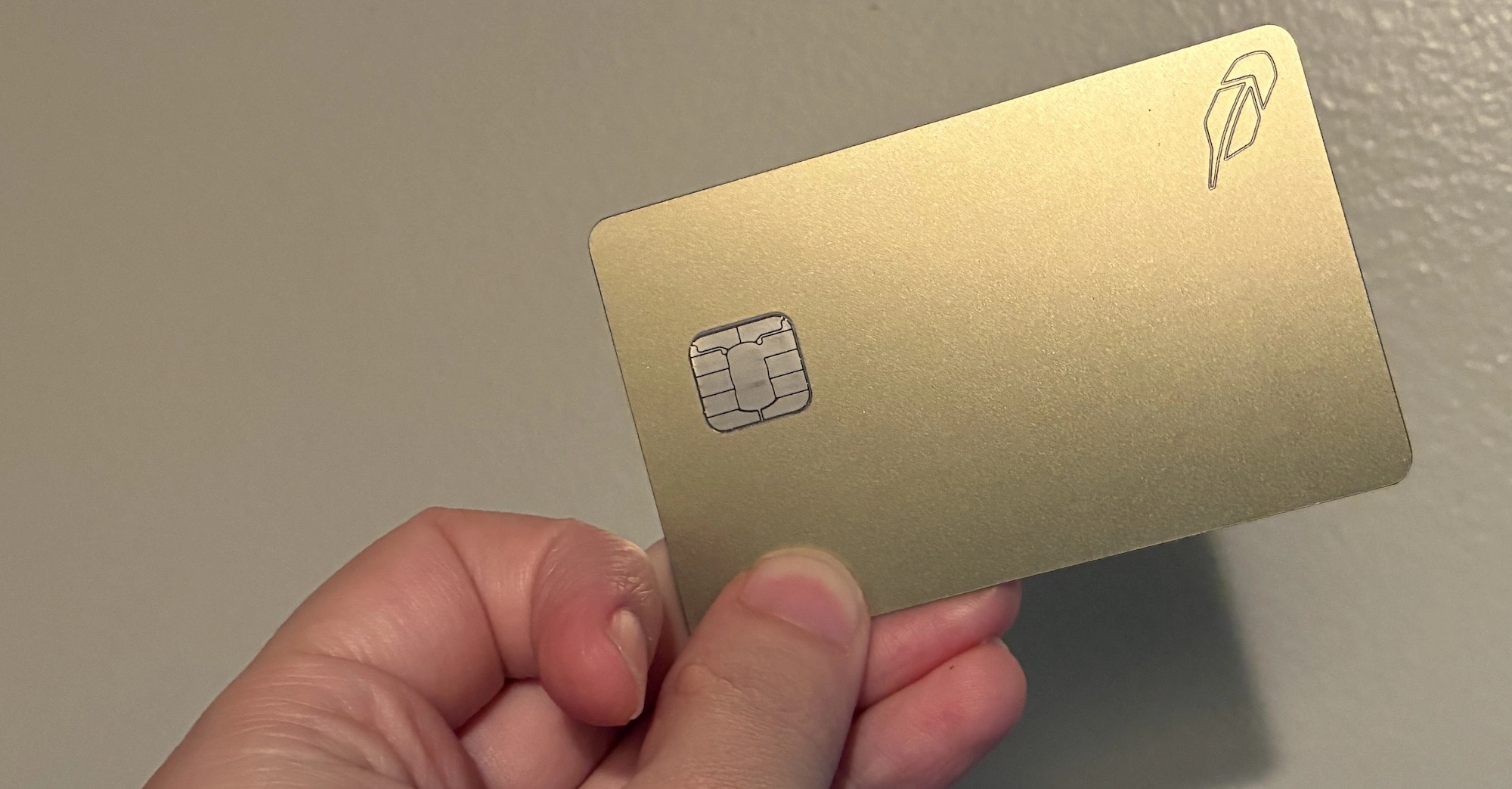
As you might expect from a company like Robinhood, the Robinhood Gold card is made of metal (and some are even real gold, but we’ll talk about that later). The standard card may not be the heaviest in my wallet, but it’s solid and sturdy, which I appreciate.
Also, similar to the Apple Card, there are no card numbers displayed. This makes it more secure, but also means you’ll need to head to the app to see your card number (or memorize it, I suppose).
Speaking of the digital card number, in the Robinhood Banking app you’ll find the ability to generate virtual cards. Moreover, there are some clever options for these. For example, in addition to the regular virtual card, you can create:
- Free trial card – Auto-expires after 24 hours
- Single-use card – Auto-expires after one use
- Agentic card – Built for use with AI agents
I love that Robinhood offers these and makes them so easy to manage. It reminds me of the days of using Privacy.com — except that I’m earning 3% back along the way!
Authorized Users
Robinhood bills the Gold Card as buying built for the whole family, and I think it lives up to that. Just as the product offers plenty of options for virtual cards, it also gives you lots of customization options when it comes to authorized users. This allows you to tailor the card to a partner, child, parent, or other loved one.
There are three main options you’ll have when setting up a new cardmember: full access, partial access, and no access. With full access, cardholders will basically be able to see and do everything you can. As for partial access, this will only allow them to see transactions they’ve made with their card. I trust that “no access” is self-explanatory.
Another choice you’ll have is whether or not you want a card reported to the credit bureaus. This could be a great option for those looking to help their friends or family build credit. Meanwhile, in my case, I didn’t feel a need to have my wife’s card reported.
By default, the additional member card is not made of metal. Furthermore, it actually does have a card number on it. But, if you want to upgrade your authorized user to a metal card, you can do so for $40 when adding them or for 5,000 points after the fact.
Earning Rewards
Now we get to what makes the Robinhood Gold Card exciting: the rewards. With the card, you’ll earn 3x points on nearly all purchases. There are a few exceptions to this, such as tax payments, but nearly everything else will be 3x.
Before this card, the gold standard (pun intended) was 2% flat rate cards. Thus, since getting the Gold Card, it’s become my new catch-all. While I’ll still use my other cards if they match or beat the 3x rate, for pretty much all other non-category purchases, I’m reaching for that shiny gold rectangle — and it’s a beautiful thing.
Welcome Bonus
One big drawback of the Robinhood Gold Card currently is that there’s no welcome bonus. That’s a bummer since these offers often provide tremendous value. Instead, the Gold Card has a long-term value proposition, so I guess they don’t feel the need to entice new customers with upfront deals.
Redeeming Rewards
Statement Credits
When I first looked to redeem my Robinhood points, the first option that jumped out to me was Statement Credits. In addition to listing some common redemption denominations on the widget for this option, it even offered the ability to auto-redeem points in the future.
Sounds smart, right? Unfortunately, no.
As it turns out, this statement credit option severely cuts the value of your earned points. Instead of getting the 1¢ per point you’d probably expect, you’ll get just 0.7¢ per point. That effectively turns this 3% back card into a 2.1% back card. No thanks!
So, if statement credits aren’t the way to go, how should you use your Gold Card points?
Cashback
Cashback and statement credits may sound like essentially the same thing — but, with the Gold Card, they’re quite different. With this option (found lower down on the list of redemptions), you’ll actually get 1¢ per point, which I think is fair.
When you select this option, you’ll be redeeming points toward deposits to your Robinhood brokerage account. You can enter any amount of points you want to apply to your transfer — and, again, this option values points at a cent each.
Once they reach your brokerage (which is pretty much instantly, in my experience), you can use your funds to purchase investments or leave it parked in order to earn interest. What’s funny is that you can also turn around and transfer it right back to your Robinhood Banking app. Since Robinhood’s savings account offers a slightly higher APY than the uninvested cash in your brokerage does, this has been my move.
Again, I don’t know why Robinhood decided to be confusing and add a small layer of extra complexity to their offering, but I strongly suggest taking the time to go through this cashback option and getting the full value for your points.
Mystery Boxes
Over the years, Robinhood has been accused of basically legalizing gambling. Their expansion into prediction markets certainly didn’t help fight that perception — and neither does this particular redemption option.
For 1,000 points ($10), you purchase a Mystery Box. While the promotion for this lists such possible prizes as 10,000 points, 5% back for 30 days, and more, odds would suggest that most rewards are far less lucrative.
As a reviewer, I felt it was my duty to at least purchase one of these Mystery Boxes to see how it worked. What I got was 5% back on my next grocery store purchase. That’s actually not a bad deal… except that I paid $10 to get it. Doing the math, I’d need to spend at least $500 on that grocery purchase just to break even! Oh, and somehow my online purchase from a coffee roaster triggered this offer, so my 5% bonus was applied to a $30 order.
Maybe you’ll get lucky and score a winner on your first buy, but I suspect that most people will burn through valuable cash back trying to win “free” points. Please don’t.
Travel
There happens to be a travel portal built into the Robinhood Banking app. Here, you can book flights as well as hotels. What’s more, you can use your earned points toward your purchase. In this case, they’ll be worth 1¢ per point, which is nice. Additionally, while the point costs quoted cover the entire fare, if you have fewer points than that, you can still redeem what you have at the same 1¢ value.
While I don’t think this is a bad deal, seeing as it matches the 1¢ per point you’d get from the cashback option, I would warn that you’ll probably want to compare booking prices on the portal to those found elsewhere, including booking directly. But, if you really want to cash in your earnings for travel bookings, this is a perfectly fine way to use your points.
Gift Cards
Another redemption option that I think is pretty solid is gift cards. In the app, you can currently purchase gift cards for the likes of Best Buy, Chipotle, Chewy, Instacart, Nintendo, Starbucks, Uber, Walmart, and more. What’s great is that you’ll get 1¢ per point in value with these options. So, this gets my stamp of approval.
Amazon
As you can with some other cards, Robinhood allows customers to redeem their rewards directly through Amazon. To do this, you just need to add the card to your Amazon wallet. However, once again, this isn’t something I’d recommend as you’ll only get that sad 0.7¢ per point.
Gold Bars, Upgraded Cards, and More
Lastly, Robinhood offers a number of specialty Gold cards as well as an actual gold bar. These range from expensive to wildly expensive.
On the low end, you can upgrade your authorized user’s card to a metal card for 5,000 points. Next, there’s currently a limited Rose Gold card for 7,500. Moving on up, you can claim a 24k Gold Card for 100,000 or a Solid Gold Card for a whopping 850,000 points. And, lastly, there’s that 10 gram-24k pure gold bar for 200,000 — although there’s an asterisk next to this one as Robinhood warns that this price could fluctuate.
Granted, I don’t know how much 10 grams of 24k gold goes for these days, but that’s a lot of points. Still, I guess I’d say that the bar is a better buy than the cards. Or, maybe just take the cashback and buy gold elsewhere if you really want.
Final Thoughts on the Robinhood Gold Card
After literal years of waiting, I’m glad to now have the Robinhood Gold Card in my credit card mix. At long last, I can now earn a baseline of 3% back on nearly everything I buy, which is great. On top of that, while a Robinhood Gold membership is required, I’ve found said subscription to be a moneymaker for me.
My only real complaint about the Gold Card is that I think it’s a bit deceptive to offer a statement credit option but assign a poor value to that redemption option. Similarly, the Mystery Box option is silly. But as long as you select one of the full-value redemptions, I think this is a great card that can help you increase your cashback rewards.