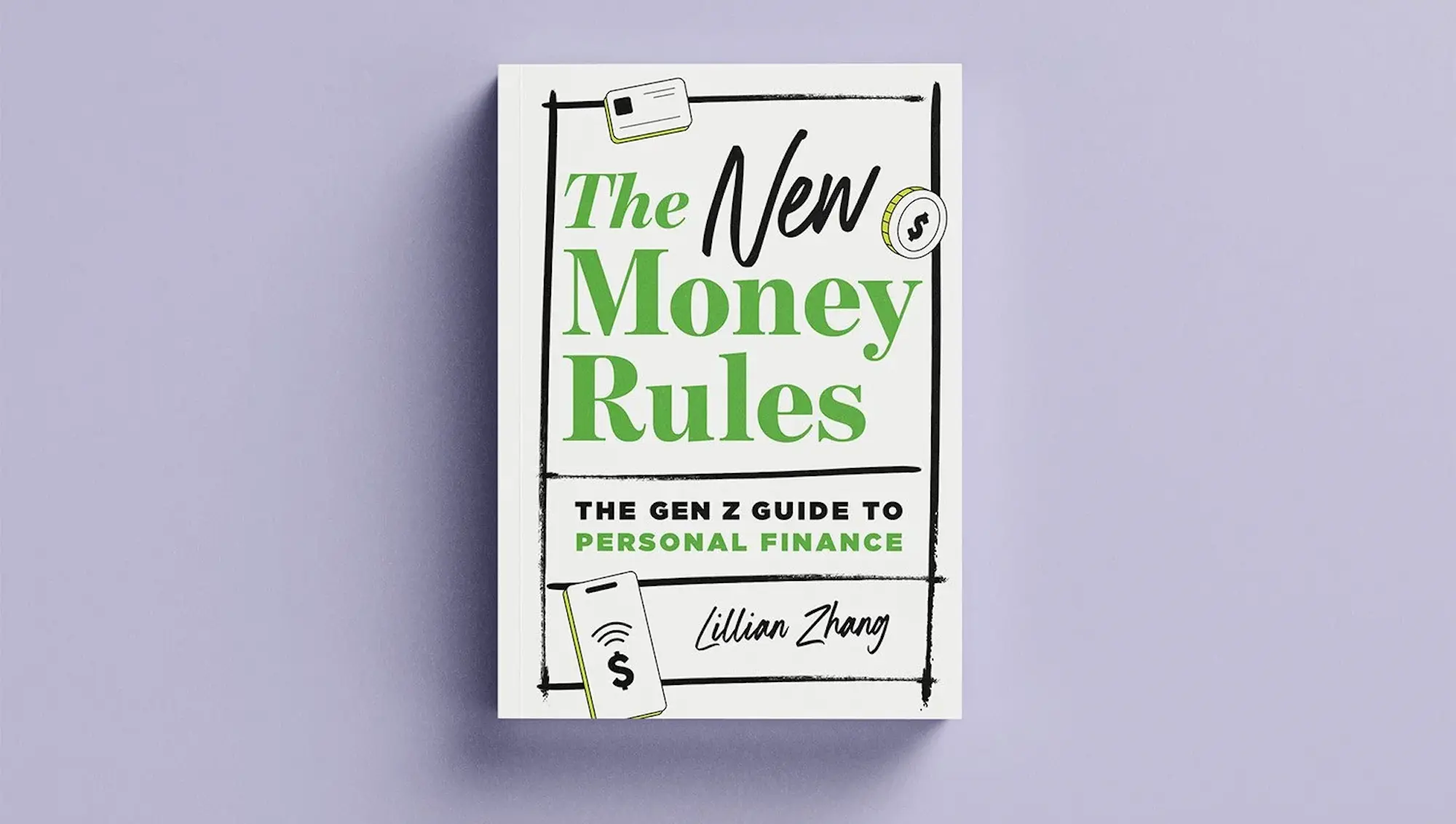

Over the years, I’ve learned that no one really understands how generations work. It’s understandable since there’s often not a set-in-stone definition for when a generation starts or begins. But one thing’s for sure: I’m solidly a Millennial. That means that I’m not the intended audience for The New Money Rules: The Gen Z Guide to Personal Finance (which was released earlier this year). Nevertheless, I decided to cash in one of my Audible credits and see what I might be able to learn from the next generation.
To start the book, author Lillian Zhang looks at some of the ways the Gen Z experience differs from past generations. For example, she notes that these social media natives are particularly susceptible to being influenced or comparing their financial lives to others. Of course, there’s also the fact that many of these young adults were finishing high school, in college, or just entering the workforce when the pandemic upended our lives. She also takes some time to debunk some “Gen Z Myths” — which mostly break down to the same stereotypes older generations have long pegged on the youngins.
Zhang goes on to highlight some older money rules that no longer apply, such as “stay loyal to a job” (while Gen Z has been branded as job-hoppers, that strategy has been shown to result in better pay) or “it’s not a good look to talk about money openly.” Meanwhile, renting has largely become the norm and investing has been democratized. Yet, while personal finance info is easily accessible, she points out that financial literacy is still not a common topic in schools, leaving many grasping for the basics.
In turn, the rest of the book is dedicated to some core financial topics. These include generating income, saving, budgeting, investing, credit, debt, and more. The psychology of money is also touched upon, such as in the second chapter, where Zhang explains the concept of “money stories” and how we can work to change our perceptions of finance.
One key moment in The New Money Rules is when Zhang invites readers to draft a road map for themselves, including immediate, short, and long-term goals. These maps are then revisited in the book’s conclusion, with Zhang even advising that individuals refer to them every few months as they navigate the various seasons of their financial lives. I also appreciated the discussion of ikigai — a Japanese idea that involves finding a purpose that gives you joy in life.
As a personal finance and FinTech nerd, I did want to note one milestone I found in The New Money Rules. With this book being released after the death of Mint, it’s the first I’ve read that excludes the service from the roundup of budgeting apps. Instead, Zhang points to options like Copilot, Monarch, and YNAB.
I’ll admit that, while listening to The New Money Rules, there came a point where I honestly wondered if I had read the book before. It turns out that I haven’t — but that unfortunately speaks to how a lot of the content in this book can be found elsewhere. Moreover, despite the pronouncement that personal finance has completely changed, I didn’t come away with any particularly fresh insights. To be clear, though, this is purely a symptom of my reading dozens of such books in recent years and is not actually a flaw of Zhang’s work. In fact, I agreed strongly with most of her advice and think that those of any generation could benefit from hearing it.
At the end of the day, The New Money Rules: The Gen Z Guide to Personal Finance is filled with solid “Money 101” tips and explainers. Moreover, the angle of the book is clever, as the Zoomer generation is now at the age where these topics are key. Therefore, if you are a young adult who hasn’t yet been exposed to some of these financial concepts and details, this could be a great place to start. However, if you’ve read other books on budgeting, saving, and investing, you’re unlikely to learn too much more from this one.
- Tailored for Gen Z readers and young adults
- Covers a number of personal finance topics as well as some psychology of money
- A majority of material is well-covered in other books