
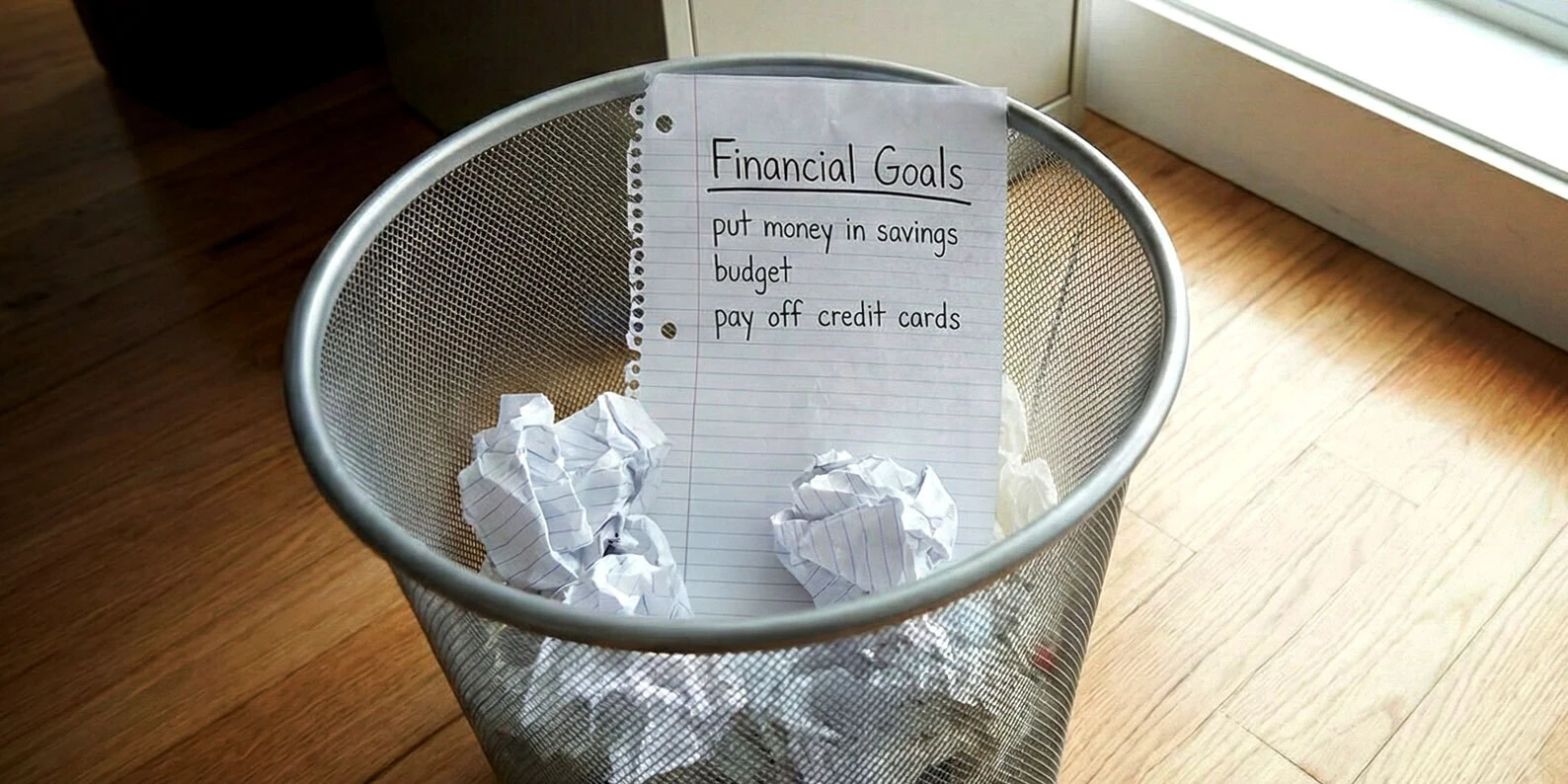


With the year coming to an end, a new survey asked Americans about their financial-related resolutions.
About the New Year’s Resolution Survey Results:
Recently, QuestionPro conducted a survey (commissioned by Beyond Finance) of 2,000 Americans, asking them about their upcoming resolutions — and how their past plans panned out.
First, according to the survey, 83% of respondents who made finance-related resolutions last year failed to meet all or some of their goals. That includes 38% who admit to giving up on their resolutions within the first quarter of the year.
Even though the rate of failure is high, nearly half of those surveyed say they plan to make money goals their 2026 resolutions. Of those, though, only 45% are confident that their goals will result in improved finances by the time 2027 comes around.
Among those who are making financial resolutions, 43% stated that paying down debt was a priority for them. Meanwhile, 14% intend on building up an emergency fund. Additionally, 9% said they want to reduce their spending and/or maintain a budget in the new year.
What They’re Saying:
Commenting on the survey results, Beyond Finance’s chief financial wellness advisor Dr. Erika Rasure stated, “January may still feel like a reset, but Americans have stopped believing it leads to lasting financial change. People aren’t failing at resolutions because they’re bad at sticking to them, but because goals don’t tend to stick around if they aren’t aligned with a person’s values from the get-go.”
Rasure added, “Rather than giving up on resolutions, dig deeper to understand what values shape your attitude toward money and work to address how they can improve your money management and financial wellness.”
My Thoughts:
As I’ve said before, I’m not a big fan of New Year’s Resolutions overall. However, my problem isn’t so much with the timing as it is with the approach. Time and time again, we see people making vague promises to themselves without having an actual, actionable gameplan.
The good news is that, in terms of the priorities respondents picked, they have the right idea about what types of financial goals they should set. But, if they want to be successful, they’ll need to go a few steps further. For example, building an emergency fund in 2026 is a great aspiration — so you’ll want to calculate how much you’ll need, how much to set aside each month to reach your goal, and how you’re going to cut back on other spending to ensure that you’re able to set aside those funds as intended.
Even if a majority of New Year’s resolutions fail, if you really want to make changes in 2026 — and not even necessarily starting on January 1st! — do your research, make a real plan, and find an accountability partner to help you get there.