


Five years ago, I picked up the book The Psychology of Money by Morgan Housel after seeing it on Amazon — and absolutely loved it. So, when I saw that he was releasing another book, I immediately pre-ordered. That book was 2023’s Same as Ever, which I also enjoyed. That brings us to this year as The Art of Spending Money: Simple Choices for a Richer Life hit store shelves and, in turn, my Audible library. Could this third Housel installment live up to the hype I have for it after two previous hits?
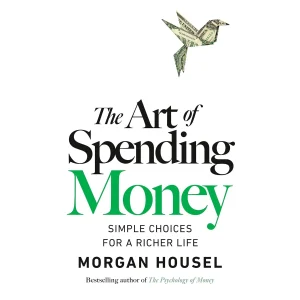
First, if you’re looking for a detailed “how-to” on building a budget or getting started with investing, that’s not this book. Instead, the “simple” adjective in the subhead rings true as Housel offers some small changes that could make big differences. Also, considering that his breakout book was all about the psychology of money, it should come as no surprise that many of these tips require adjustments to your mindset and the way you think about concepts such as wealth, needs, and even identity.
One truth that Housel hammers is that personal finance is personal and, thus, there is no “right” way to spend. In fact, he notes that two people are very unlikely to have the same spending habits since we all value different things. On that note, finding what we do value and making that a keystone of our spending is the entire point!
Like with his other books, Housel does a great job of tackling what could be jargon-heavy and heady topics and making them approachable. In particular, an aspect of this book that I loved was the relevant anecdotes and stories he inserts throughout. I even heard some familiar names in there, which is always exciting for a money nerd like me. But, beyond quoting other financial thinkers, Housel manages to draw parallels to unlikely examples, such as an around-the-world boat race, of all things. Some of these tales are a bit extended, perhaps leading you to wonder where the lessons actually apply — but, in each case, it does come around, often making an astoundingly astute point.
For as much as I enjoyed The Art of Spending Money and its messages, there were times when I felt like I was listening to the same thing over and over. Specifically, the idea that we often spend to impress other people is hit on numerous times. Granted, it is often somewhat recontextualized to fit the specific chapter, but it still stood out to me as repetitive. In fact, I’ll admit that I was a decent way into the audiobook before I realized I wasn’t still in the introductory chapter. Luckily, the book does have more to say beyond that — but if you are binging it like I was, you may encounter a similar result.
Despite that criticism (which, to be fair, may also be impacted by the number of financial books I’ve consumed over the years), I thoroughly enjoyed The Art of Spending Money. Even in instances where I was familiar with the central points Housel was making, I found his writing on said topics to be enlightening, interesting, and often humorous. Heck, I even found out why he takes slight issue with the term “F You Money.” This is to say that, even if you aren’t necessarily in need of a financial awakening, I think you’ll still get something from this book.
In my mind, The Art of Spending Money: Simple Choices for a Richer Life is the type of book you can give to someone who feels stuck in their financial life but isn’t ready for the types of “money makeovers” we usually associate with personal finance books. Once again, Housel delivers financial lessons that will surely be a revelation to most, leading them to feel motivated, encouraged, and excited to approach their spending in an entirely new way. In that way, you could think of this more as a self-help book akin to Atomic Habits than something in the Ramsey realm. For that reason, I think it’s a book that makes a great gift, be that for yourself or someone you love.
- Offers some big yet simple ideas for changing your money mindset
- Includes examples and anecdotes the illustrate the points
- Can be slightly repetitive at times
- Not a ‘how to budget’ type book